The grilling — the player writes the questions
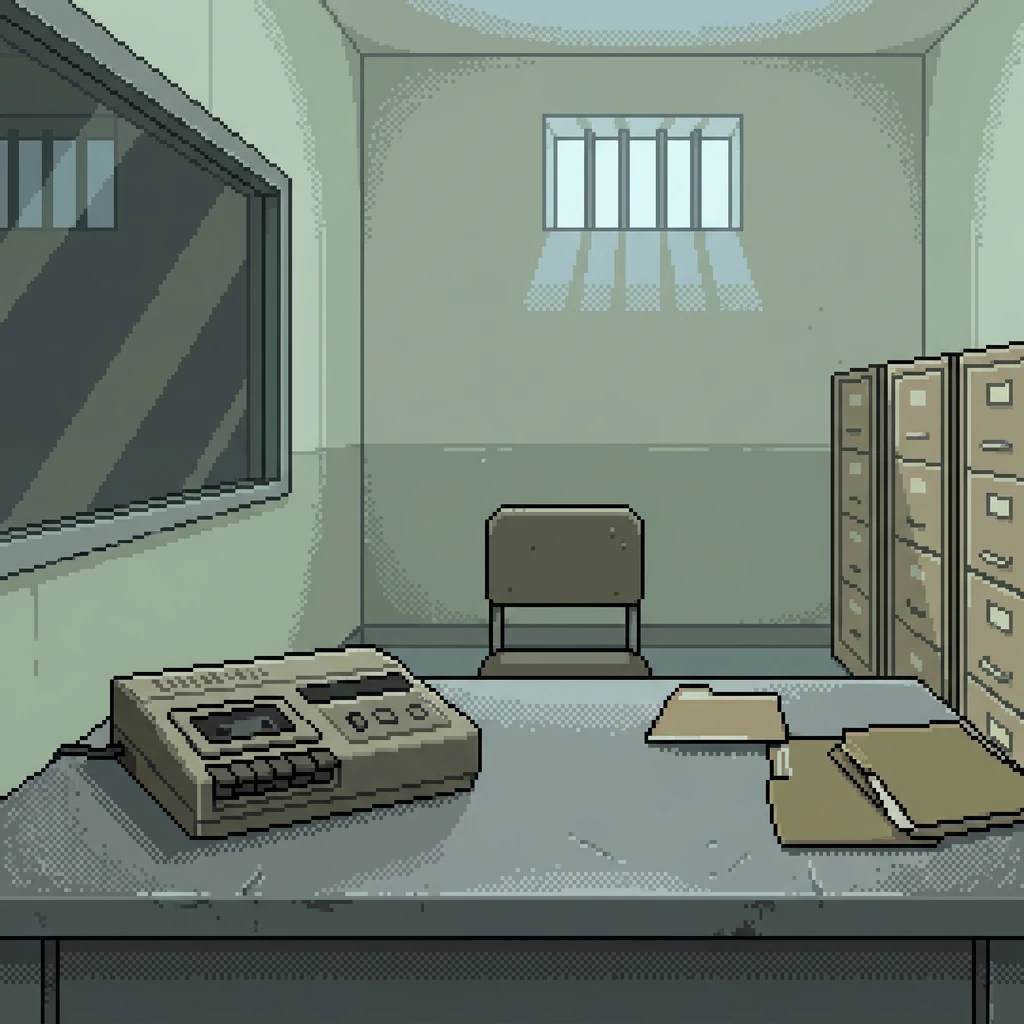
Sooner or later you sit down across from a prosecutor, in front of an ethics panel, or in an ambush interview.
What the other side opens is not a list of questions we wrote. It's your file.
The question sheet is a derived value
There is no question content file for the grilling. The sheet is built like this:
Take the player's ledger. Sort it by evidence strength, descending.
That's the whole thing. Thirty years of accumulated entries become the running order, and the most dangerous item comes up first.
If your file is thin, they have nothing to ask about. In that case the sheet gets padded with fishing questions carrying almost no evidence — for someone who lived clean, this scene is a walkover. We think that's the correct outcome.
There's a side effect that, from the developer's side, is the biggest thing about this design: new questions cost nothing to write. Add one new action that can land in the ledger and you've added an interrogation question. Automatically.
Four cards
Each question takes one of four answers.
- Deny — a gamble
- Concede partially — a safe loss
- Stay silent — it looks bad
- Counter — burn a piece of intel you've been holding
Only denial forks. If the evidence they hold is below the threshold, denial works. If it's above, the denial fails — and that failure becomes perjury, entered into your ledger as a new line. The new line's evidence strength scales with the original entry's.
So denying something big and losing leaves the original entry untouched and adds a heavier one on top. In this game a lie isn't a risky option. It's an option that increases the principal.
What you know and what you don't
You know your own file. Open the briefcase and you can see which entries are weak. That's the prediction axis of the scene.
What you don't know is what they've got. For the same incident, the evidence strength on their side is tracked separately.
This is where the cunning stat enters. Below a floor, you read nothing at all. Above it, you get a hint — they're holding something / they're bluffing — and the hint is not 100% accurate. A higher stat only raises the odds it's right.
The possibility of a wrong hint is the last piece of uncertainty we left in this scene. If the hint were always correct, this stops being an information game and becomes a button.
Countering means breaking the piggy bank
The counter card only lights up if you have a completed dossier. Intel comes in fragments, three to a dossier, and gathering them takes turns.
Burn it and it's gone. Spend it on this question, or save it for the nomination fight next month? Making you run that calculation while sitting in a hearing room is the entire point of the card.
Why we built it this way
For a long time the ledger was a thing that only detonated. Players watched the risk climb and then, one day, received a front page. They were on the receiving end, never the handling end.
The grilling is the first scene where the file lands in the player's hands. Thirty years of documents you wrote yourself — and this time you turn the pages sitting across from them.